Key takeaways
- Sound framing is the best sign a shed is worth saving.
- Rotted floors and bottom walls can usually be repaired if the rest is solid.
- A shed in good shape can often be moved in one piece.
- A leaning, rotted or infested shed may be safer to replace.
Signs it can be repaired
Straight walls, a sound roof frame and a floor that is only partly soft are good signs. Loose siding, worn roofing, sticking doors and settled corners are all repairable. If the repairs add up to most of a new building, replacing may make sense.
We inspect and tell you honestly.
Signs it can be moved
A shed in good structural shape, especially one on skids, can often be lifted and set on a new base. The new spot and the route must be ready. Moving a weak shed risks damaging it.
Send us photos and the size and we will check.
Signs to replace it
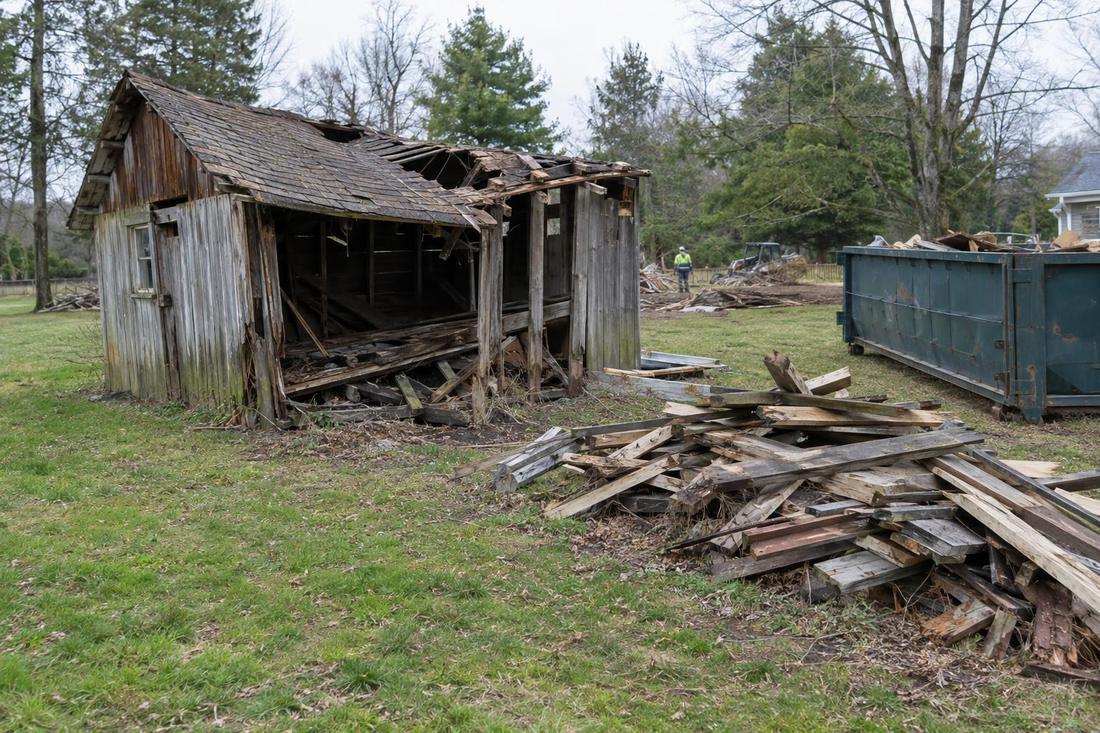
Widespread rot, termite damage in the framing, a collapsed roof or a bad lean make a shed unsafe. Replacing it with a new building on a proper base is the better investment.
We can take the old one down and haul it away.
Making the choice
Weigh the condition, the size, whether the shed still suits your needs and what you want to spend your effort on. Sometimes the old shed is the wrong size anyway.
A short visit helps you decide.
Official sources and further reading
- Better Business Bureau
- National Association of Home Builders
- Tennessee Board for Licensing Contractors
These are independent organizations. Links open in a new tab.
Quick answers
Can a rotted floor be repaired?
Often yes, if the walls are sound.
Can you move a shed that is full?
We prefer it empty for safety.