Key takeaways
- Unanchored sheds can slide or tip in strong wind.
- Auger, strap and concrete anchors each suit different bases.
- Keep trees trimmed and gutters clear.
- After a storm, check for damage before you go inside.
Why anchoring matters
A shed is a large, light box with a big roof. Strong winds can lift or push it, especially on open ground. Anchoring ties the frame to the ground or the base so it moves less.
Anchors reduce risk but do not make a shed storm-proof.
Types of anchors
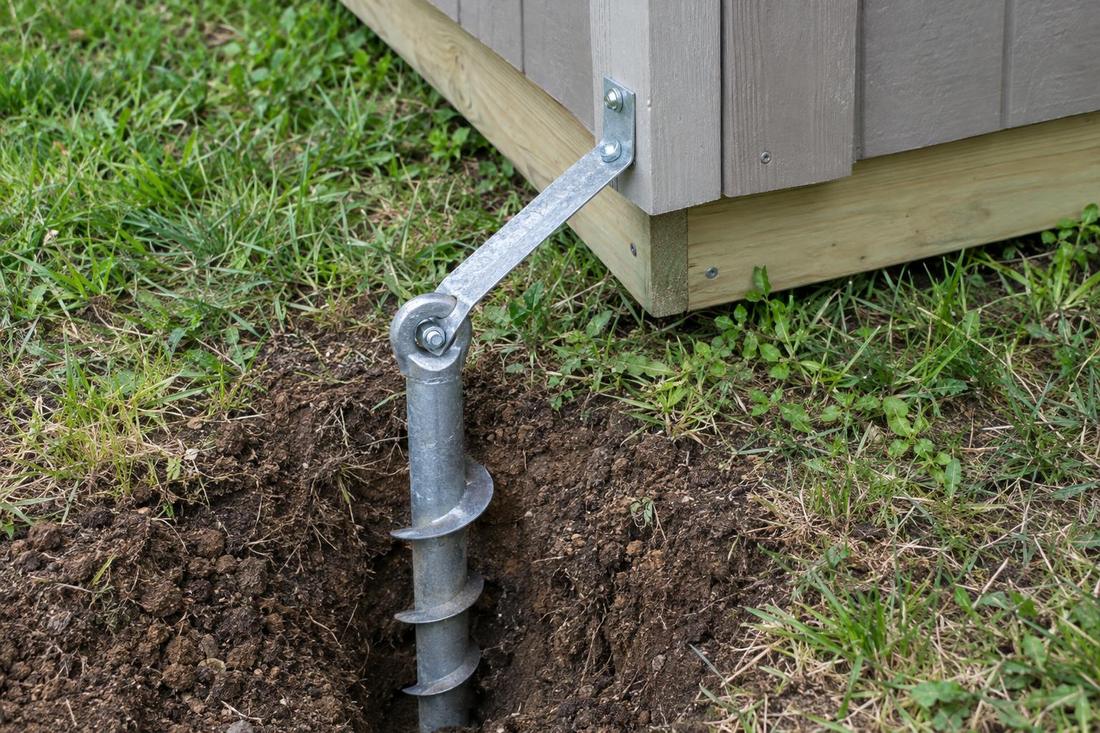
Auger anchors screw into soil and are used with straps or cables. Anchor bolts fasten the frame to a concrete slab. Strap kits hold the roof framing down. The choice depends on the soil, the base and how exposed the site is.
We pick and install the right type.
Before a storm
Close and latch the doors, move loose items off the roof and away from the building, check the anchors and trim any dead limbs overhanging the shed. Watch your local forecast, such as the National Weather Service in Nashville.
Do not shelter in a shed during a storm.
After a storm
Walk around the building and look for leaning walls, lifted corners, damaged roofing and fallen limbs. If it is unsafe, stay out and call for help. We can inspect, repair or re-anchor a shed after a storm.
Photograph damage for any insurance claim.
Official sources and further reading
These are independent organizations. Links open in a new tab.
Quick answers
Do I need anchors if my shed is on a slab?
Yes. Anchor bolts tie the frame to the slab.
Can you anchor a shed I already have?
Yes, often in a few hours.